Zobrazují se příspěvky se štítkemGlobal Politics. Zobrazit všechny příspěvky

středa 19. června 2013

Security Challenges in Contemporary Central Europe

Web journal Global Politics, associated with the Department of International Relations and European Studies, Masaryk University, Brno, Czech Republic and supported by the International Institute of Political Science in cooperation with security web magazine Sekuritaci.cz announces a call for paper proposals for our second Special Issue on the topic:


Even though most Central European countries have been successfully integrated into Atlantic and/or European international organizations for nearly a decade, the region still faces security challenges that are in many ways distinctive from those of other countries on the continent. Due to the region's unique historical experience, we can observe for instance heightened securitization of energy security issues and relations with the Russian Federation in general, or various „internal“ challenges as well, such as far rights movements, transnational organized crime or exclusion of Roma minority. However, the Central European security experience is by no means limited only to these topics, and there are also very interesting developments in other areas, be it transnational cooperation on security issues or adaptation of security sector to contemporary security challenges (i.e. migration, terrorism, proliferation of WMD etc.).

The accepted papers are to be published as a peer-reviewed collective monograph. We welcome proposals employing both well-established and innovative methods of research and related to the security challenges and practices in contemporary Central Europe including but not limited to:
• Securitization in Central Europe
• Security policies of Central European countries
• Security cooperation in Central Europe
• Central European energy security issues
• Security sector reform and europeanization
• Central European response to transnational security challenges
• Internal security challenges and politics of coping
• New security practices in Central Europe (risk management, biopolitics,...)

Please send your paper proposals, in the form of maximum 250 words long abstract, by 15th July 2013 to redakce@globalpolitics.cz.

We especially encourage advanced students of Master's or PhD programmes to submit their abstracts. Please add brief information about your affiliation and level of studies. The final deadline for 20 - 30 pages long papers will be in late October/early November.

úterý 19. února 2013

Výsledky soutěže "Volby a politický marketing"

Časopis Global Politics ve spolupráci s PMG-CEE a pod záštitou Fakulty sociálních studií Masarykovy univerzity vyhlásil na podzim soutěž o nejlepší studentský odborný text na téma: „Volby a politický marketing“. Byly vybrány tři vítězné práce:

Fidži: Neúspěšný případ volebního inženýrství (Ivan Jarabinský) - autor zkoumá reálný dopad volební reformy na volby do Sněmovny reprezentantů na Fidži z roku 1997, respektive zda reforma splňuje účel, ke kterému byla navržena. Z analýzy pak vyplývá, že se jedná o silně problematickou reformu volebního systému, jejíž přijetí nemělo požadovaný efekt.

Možnosti a limity reformy volebního systému do PS PČR z roku 2008 (David Kopecký) - jsou představeny tři hlavní zvažované varianty reformy z roku 2008 a analyzovány jejich možné účinky na český stranický systém. V rámci práce pak autor na základě vlastních výpočtů prezentuje volební model pro každou z variant, který pracuje s daty z posledních voleb do PS PČR. Dané výsledky jsou poté diskutovány ve světle předložených teoretických východisek.

Aspekty úspěšného brandu – případová studie TOP 09 v letech 2009–2011 (Jan Hejtmánek) - text se zaměřuje na posouzení úspěšnosti brandu politické strany TOP 09 a dle předloženého teoretického rámce shledává, že si TOP 09 v období od svého vzniku v roce 2009 do prosince 2011 poradila velmi dobře se všemi aspekty a výzvami budování nové politické značky.

úterý 22. ledna 2013

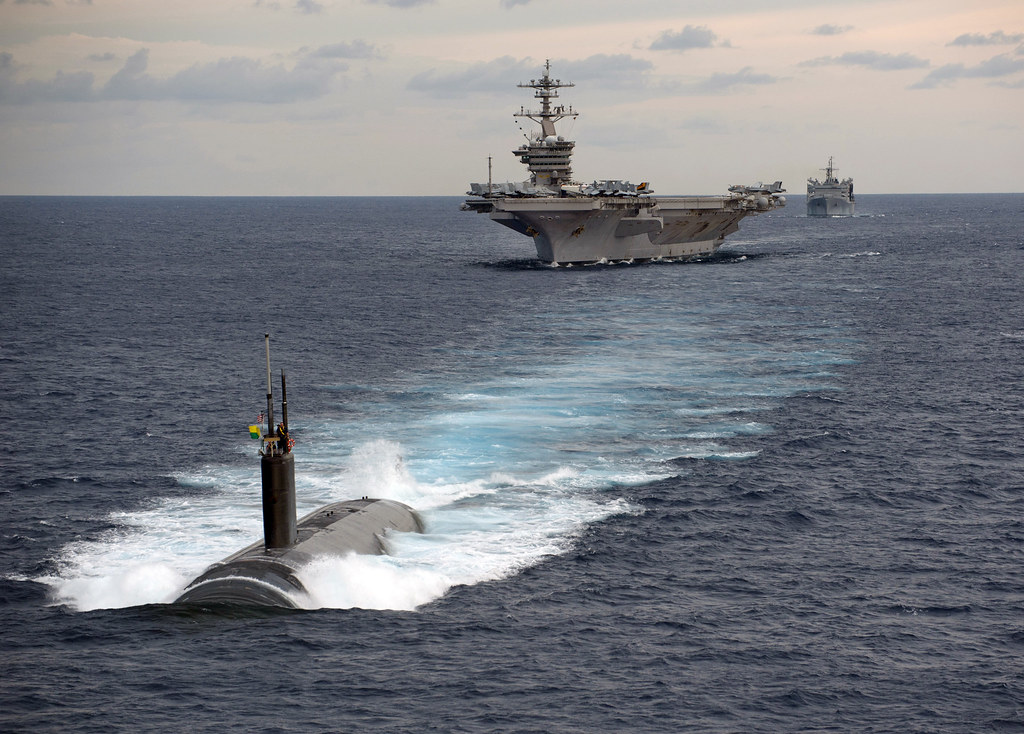
Michaela Bendíková: President Obama’s Nuclear Policy

Since taking office, the Obama Administration has sought to enact policies that would fundamentally change premises on which the U.S. nuclear posture has lain since the dawn of the nuclear age. If Congress fails to act to prevent them, the United States will end up weaker and allies around the world will further question the validity and credibility of U.S. nuclear security guarantees.

Celá esej od Míši Bendíkové z Heritage Foundation je na webu Global Politics.
Foto: U.S. Navy

Jiří Bílek - Kyselá těšínská jablíčka (recenze)

Ačkoliv v dnešní době má Česká republika v Polsku jednoho ze svých nejbližších spojenců a vztahy obou zemí lze označit za dobré až velmi dobré, v minulosti tomu bylo občas právě naopak. Není proto divu, že se k tomuto tématu objeví nové akademické i neakademické práce, zkoumající tehdejší situace z různých úhlů pohledu. Poslední takovou publikací je kniha PhDr. Jiřího Bílka, CSc. s názvem Kyselá těšínská jablíčka.
 

úterý 8. ledna 2013

Challenges for Obama

The latest Global Politics Symposium is aimed on finding the most important challenges for the new president of the USA. Besides that, we also asked scholars with different theoretical, cultural and/or ideological background to propose a major advice on the challenge(s) they identified. It is our great pleasure to publish answers of Robert Shapiro (Columbia University), Zlatko Šabič (University of Ljubljana), Derek Beach (Aarhus University, Denmark), Ondřej Ditrych (Institute of International Relations, Prague), Arshin Adib-Moghaddam (School of Oriental and African Studies, London) and Valentina Cassar (University of Malta).

See Global Politics.

neděle 30. prosince 2012

Why has post-war reconstruction in Afghanistan not succeeded?

In this paper it is demonstrated that the reconstruction of Afghanistan has failed. The author illustrates this point by a number of examples and argues that the cause of this failure can be identified as framing that applies prefabricated and universal recipes to particular cases and situations. It is argued that not reflecting particular needs of post-war areas inevitably leads to reconstruction failures. In the last section some particular frames are outlined which can be seen in the reconstruction work in Afghanistan.

Autorem textu je Tomáš Váňa. Najdete jej na webu Global Politics.  
Photo: Wiki

Zheng Yongnian: The Chinese Communist Party as Organizational Emperor (recenze)

Čína a její politika patří v současnosti mezi jedno z nejprominen­tnějších témat ve výzkumu mezinárodní politiky. Mezi různými otázkami, které se v souvislosti s Čínou velmi často probírají, však do určité míry chybějí analýzy Čínské komunistické strany (Chinese Communist Party, CCP), které se nezaměřují pouze na vnitrostátní a vnitrostranickou politiku, ale mají ambici analyzovat CCP jako specifický a unikátní politický útvar.

Navíc někteří pozorovatelé čínské politiky mohou mít pocit, že CCP není ničím neznámým díky tomu, že jsme velmi dobře obeznámeni se sovětskou komunistickou stranou či dalšími komunistickými stranami z doby nedemokratických režimů ve východní Evropě. Recenzovaná kniha zaplňuje zmíněnou mezeru ve výzkumu a snaží se také ukázat, že CCP není možno vnímat pouze jako kopii sovětského modelu, ale spíše jako produkt čínské kulturně-politické tradice.

Autorem knihy je čínský profesor politologie Zheng Yongnian, který v současnosti působí na univerzitě v Singapuru. Zheng se ve své dosavadní kariéře věnoval čínské zahraniční i domácí politice, kde se zaměřoval na otázky demokratizace a nacionalismu. I v této jeho nejnovější publikaci na téma možností demokracie a demokratizace Číny naráží. 

Autorem recenze je Aleš Karmazin, celou ji najdete na webu Global Politics.

pondělí 19. listopadu 2012

Changes of Power in Global Context

Since the end of the Cold War, there have been many debates and attempts to conceptualize, analyze or explain global change(s) of power from various perspectives. GP essay competition gives students of bachelor's or master's programs an opportunity to contribute to the debate.
 
The goal of the competition is to interpret changes of power at the global level which may include using different approaches to study of global politics (security/strategic studies, international political economy, approaches inspired by political sociology etc.). Participants' papers may be theoretical investigations or empirical analyses, but need to reflect or relate to global distribution of power in world politics since the end of the Cold War.
 
Papers will be assessed according to their originality, precision, and quality of argumentation. They must use a consistent referencing style and the length should be no longer that 3,000 words (including footnotes, excluding bibliography). Quallity of an essays will be assessed by anonymous reviewing.
 
The best essays will be published in the Global Politics magazine and rewarded 2,000 CZK (about 80 EUR); 1,500 CZK (about 60 EUR) and 1,000 CZK (about 40 EUR) in the form of voucher for buying academia literature.
 
Deadline of submissions: 31th December 2012.
 
Please send your papers or queries to: redakce@globalpolitics.cz.

sobota 20. října 2012

Interview with Andrew Linklater for Global Politics

Does the field of International Relations need to be more connected with other social studies? What are the main challenges for contemporary international system and are we still able to manage them with our „Western rationality“? Are we going to see the wider transformation of particular national political communities into international ones? These questions and many more were for Global Politics magazine answered by Andrew Linklater.  

Andrew Linklater is Woodrow Wilson Professor in International Politics in the Department of International, Aberystwyth University. In his research, Linklater has continually tried to connect International Relations, political philosophy, normative social theory (Critical Theory of the Frankfurt School above all), and historical sociology. The core issue of Linklater's re­search and intellectual interest, which permeates his entire work, is concentrated on possibilities of ethical progress in international politics.


čtvrtek 18. října 2012

Global Politics Briefing - četba k americkým volbám a zahraniční politice

Už o mesiac, v prvý novembrový utorok, prídu americkí voliči k volebným urnám rozhodnúť, či v Bielom dome ostane Barack Obama i na ďalšie volebné obdobie, alebo ho na poste najmocnejšieho muža planéty nahradí republikánsky vyzývateľ Mitt Romney.

GP Briefing zde.
Autor: Filip Šebok

pátek 12. října 2012

Regional Integration in Europe and Latin America

Comparative regional integration studies is an expanding subject. Its broad interdisciplinary nature has made it an eclectic and overstretched field that would gain from more cohesion. This essay therefore lays foundation for a like-with-like comparison of regional integrations that is inclusive and allows for interdisciplinary knowledge. This comparison (specifically focused on Europe and South America) directly expands Gardini’s (2010) framework and takes place within five categories. Eventually, by means of the method of induction, it provides brief insight into the common dynamics of regional integrations’ inception and development that can inspire further research efforts to create a comprehensive theory of regional integration building.

neděle 30. září 2012

Soutěž Global Politics

Časopis Global Politics ve spolupráci s PMG-CEE pod záštitou Fakulty sociálních studií Masarykovy univerzity v Brně vyhlašují soutěž o nejlepší odborný studentský text na téma:

VOLBY A POLITICKÝ MARKETING.

pátek 3. srpna 2012

Mr. Smith Goes To Washington

Pár fotek z Washigtonu. Sbírka bývalých ministrů zahraničí USA (Madeleine Albright, Condoleezza Rice a Colin Powell), přísný Charles Krauthammer, nesmrtelný kandidát třetích stran na prezidenta Raplh Nader a nebo vlivný Robert Kagan.


Fotky jsou na Facebook page Global Politics.

sobota 7. července 2012

Nový web Global Politics

V rámci generační výměny v Global Politics byl spuštěn nový web, omladila se redakce a vznikla i nová Facebook page. Jde o třetí generaci webu, tuším. První vznikla v roce 2001, druhá, společně s novým logem, v roce 2006 a třetí byla spuštěna na americký Den nezávislosti 4. července 2012. Vznikla konečně poctivá anglická verze, byl upgradován redakční systém WordPress a na webu to bude žít i odkazy z Twitteru. Také archiv se proměnil, o příspěvcích je možné diskutovat a došlo i k dalším drobným změnám. Graficky se web myslím povedl, dostal svěží facelift. Přes léto se doladí nedostatky a na podzim snad vše bude dokonalé. Co na to otcové zakladatelé? :)

pondělí 18. června 2012

Is EURO doomed?


After several successful Symposiums on issues such as geopolitics, Middle East and the US foreign policy, the editorial board of Global Politics decided to prepare another edition. The new Symposium is focused on a very disputed topic of the economics of the European Union, more particularly on its common currency EURO.
For some time, we have been witnessing dramatic developments in Europe and it is no different at the time of writing of these words. Because there are serious decisions to be made in the Czech Republic and elsewhere in Europe, we think that it is neccessary to look at the issue at hand from a long-term perspective and assess the successes and failures of the single European currency. Moreover, the EURO has been supposedly an enduring project planned for generations to come, therefore we consider future development of the currency to be an important factor as well. Even though it is not possible to predict future, Global Politics is convinced that it is vital to look ahead and be prepared for possible challenges. Therefore, we asked experts also a question concerning their expectations of the future of the Euro zone. We are glad that we can present the opinions of number of important scholars and experts from the Czech Republic, Austria, Italy, Spain and the USA.

Autory jsou Richard Turcsányi a Jan Daniel.
Foto od Images_of_Money.

pátek 15. června 2012

Úpadek Západu je zasloužený - rozhovor s Ilonou Švihlíkovou

„Nacházíme se v době, kdy nepatrná událost může způsobit zásadní dopady“, říká v rozhovoru pro Global Politics o evropské krizi, americkém řešení a nových aktérech v měnícím se světě Ilona Švihlíková, expertka na ekonomii globalizace. Její odpovědi se tak točí nejen kolem příčin ekonomické krize a reakce Západu na ni, ale také hlubších změn celkové povahy světové ekonomiky a zároveň možných cest vedoucích k řešení současných problémů.

úterý 6. března 2012

Global Politics hledá redaktory

Webový časopis Global Politics působící pod záštitou Mezinárodního politologického ústavu Masarykovu univerzity, hledá redaktory pro redakční práci, editaci textů, posuzování rukopisů, korektury, správu redakčního systému a spolupráci na projektu rozvoje časopisu.
Zájemci nechť pošlou do 9.března 2012 životopis + stručné odůvodnění zájmu a svého potenciálního přínosu redakci na e-mailovou adresu redakce@globalpolitics.cz a v kopii také na petr.ocelik@gmail.com a daniel@fss.muni.cz. V předmětu e-mailu uveďte „redaktor GP". Více informací zde.

pondělí 7. listopadu 2011

Changing Geopolitics of the Caspian Region?


After the last Middle East Symposium, Global Politics editors have decided to shift their attention to other very interesting region – Caspian Sea. According to many IR scholars, world is now experiencing the power shift from the West to so called „emerging powers“, which is accompanied by various geopolitical turmoils. But is this also the case of Caspian region? If so, could this change bring some fresh air to local frozen conflicts? These questions were answered by various regional experts with diverse backgrounds and professional experiences, but profound understanding of Caspian affairs.
It is our great pleasure to publish the answers of Thomas de Waal (Carnegie Endowment for International Peace, Washington, senior associate), Emil Souleimanov (Charles University, Prague, assistant professor), Anar Valiyev (Azerbaijan Diplomatic Academy, Baku, assistant professor, Associate Dean of Academic Affairs), Leila Alieva (Centre for National and International Studies, Baku, president), Joshua Kucera (freelance journalist, analyst, Washington DC) and Tomáš Šmíd (Masaryk University, Brno, assistant professor).


Map by US Department of Energy.

pondělí 11. července 2011

Tomáš Profant (ed.): A glimpse of the post-development approach

Development is often accepted as an unquestioned goal of our societies. We just want to be developed. Critical discussion on this topic is almost entirely absent from the public debate in the Czech Republic. Global Politics magazine hopes to draw your attention to an approach that does not fit the mainstream thinking. Promising young scholars from the Vienna University treat topics such as sustainable development, colonial continuities, microfinance or the Zapatista movement in Chiapas. Their unorthodox ideas are worth a thought for students who seek more than just the usual „aid or trade“ question.

„The last 40 years can be called the age of development. This epoch is coming to an end. The time is to write its obituary… The idea stands like a ruin in the intellectual landscape. Nevertheless, the ruin stands there and still dominates the scenery like a landmark“ (Sachs 1992, 1). Wolfgang Sachs’ famous dictum has become the basis for what was later to be known as the post-development approach. He identified four founding premises that should have led to abandonment of this mindframe, which took hold of us long before Truman’s famous speech on 20 January 1949. First, the planet runs towards its ecological limits and the reproduction of the industrial (or imperial) mode of living is impossible. Secondly, with the end of the Cold war, ‘development’ lost its political impetus. As we may see today the East-West confrontation has disappeared, but ‘development’ lost nothing of its attraction. Thirdly, the ever growing gap between the rich and poor defined in terms of monetary income makes the concept seem less persuasive. One look at the Millenium Development Goals shows how ‘development’ switched from modernization to poverty reduction. The neoliberal economic panacea ruling the world at least since the beginning of the 1980s remains nonetheless. Fourthly, the single ‘development’ track indeed seems to be obsolete in the postmodern age of cultural relativism.

Twenty years later, in the preface to the new edition of The Development Dictionary, Sachs did not change too much of his analysis. He admitted that the ‘development’ has been replaced by ‘globalisation’ and stressed how the pursuit of ‘development’ has become part of the desire for universal justice. It is the South today that is the staunchest defender of development.

Even if the ‘development’ agenda has been changing throughout the last 60 years in an ever accelerating pace, we still may agree with James Ferguson that “[i]t seems to us today almost non-sensical to deny that there is such a thing as ‘development,’ or to dismiss it as a meaningless concept, just as it must have been virtually impossible to reject the concept ‘civilization’ in the nineteenth century, or the concept ‘God’ in the twelfth” (Ferguson 1994, xiii). This “interpretive grid” (ibid) stays with us regardless of whether we speak of emerging markets, good governance or failed states.

Ferguson brings one more and much more serious insight into the usual evolutionary thinking of ‘development’ (Ferguson 2006, 176–193). The racist theories that culminated during the Second World War have been discredited by the horrors of Nazism. The cultural centrism that allowed for the colonial constellation of forces to continue after the war made other cultures capable of achieving the same status as those considered ‘developed’. The nodal point of the ‘development’ discourse changed from the white man to the nation of white men. Inferior cultures only needed to work hard enough like those Asians whom supposedly helped the Asian values, but these too were to become a problem as soon as the financial crisis in 1997 set in only to be the source of success for renewed growth. However, we are in a very different situation today than we were in the 1950s. The emerging markets are much unlike the so called fourth world and as globalization picks its enclaves full of resources or people with purchasing power, the rest is abandoned to its own fate of destitution. Culture does not play the role in the broken promise of ‘development’ anymore. We are back to good old racism (which we never really abandoned) with the hierarchical axis of modernity remaining and the temporal axis disappearing from the usual evolutionary diagram. There are people on this planet who are not ‘less developed’ anymore, they are just ‘less’. The difficult connection between racism and cultural centrism easily visible in an everyday practice of ‘development’, but the more difficult to decipher within the reports of the governmental and non-governmental ‘development’ institutions is replaced by an outright racism of the humanitarian zeal for those who naturally cannot catch up if they have not done so until now.

‘Development’ thus not only contains authoritarian implications as Cowen and Shenton have shown for the era long before Truman (Cowen and Shenton 1996), but its lack results in an equally if not more dangerous forms of disdain.

What is to be made of this ‘development’ era with all its transformations, (slowly) shifting power relations and human misery? While on the one hand, there are scholars such as David Simon or Stuart Corbridge who caution us against post-structuralist, postmodern and post-colonial disengagement from practising ‘development’ at all, on the other hand there are scholars such as James Ferguson, Lakshman Yapa and Gilbert Rist who do not dismiss any engagement entirely, but try to rethink thoroughly various concepts connected to ‘development’ (Matthews 2008). Ferguson warns that there might be no need for what we do or know.

It is strange that Sally Matthews stresses the intellectual work, we ‘the privileged’ can engage in and reserves only one sentence for the change of our consumer practices. But this is a very important part of the misery on a planet that makes our game to be zero-sum. While trying to highlight the importance of our consuming habits I try to engage in the intellectual work praised by Matthews as well. This is the case when I am teaching and this is the case when the students publish their papers.

The set of six texts written for the seminar Post-Development Theory and Practice are just a tiny bit of the intellectual solidarity with distant others here at home. The first paper by Katrin Köhler engages with the continuities between the colonial and ‘development’ discourses. It demonstrates how basic colonial concepts prevail despite changes at the rhetorical level.

The second paper by Eric Pfeifer deals with the discourse of ‘sustainable development’ and shows how the consumption in the North is excluded from the picture this discourse depicts. Additionally, only those solution that are “imaginable” in Žižekian sense, i.e. those de-politicized ones, are suggested preventing radical post-politics from taking place.

The third article by Andrea Visotchnig treats the practice of ‘development’ in the form of microfinance. While it is possible to criticize microfinance on its own merits, as well as from a discursive perspective, it is also possible to consider it to be part of an alternative, post-capitalist, diverse economy. The goal then should not be to call for its complete abolishment but to embed it in non-capitalist relations.

Post-development has been fiercely criticized from various perspectives. Christiane Löper tries to define what could be understood under the term and offers answers to the main points of the critique. In her concluding section she offers an interesting insight into her personal view on post-development which she considers to be a “summary of [her] whole study of International Development.”

The fifth paper by Josefine Bingemer tries to answer whether the Zapatista movement in Chiapas could be considered a case of post-development. Using secondary sources, concrete practices in politics, education, healthcare, truth and knowledge are analyzed in relation to the post-development body of theory.

Lastly, another personal encounter is presented by Alexandra Heis, a young mother, in relation to her study and experience with the vaccination here in Europe. Not part of ‘development’ at first sight, the article shows how the notions of citizenship, trust and knowledge are treated in a very similar way by the proponents and opponents of vaccination. The layman is thus excluded from this particular knowledge-power nexus, just as is so often the case in the ‘development’ practice.

These six articles may serve yet another purpose. Their quality puts the seminar papers of students in Brno into a different perspective. I can only hope that the readers of Global Politics will use the insights offered by these talented young authors to inform their own papers and consumer practices.

Bibliography

  • Cowen, Michael P., and Robert W. Shenton. 1996. Doctrines of development. London and New York: Routledge.
  • Ferguson, James. 2006. Global shadows: Africa in the neoliberal world order. Durham and London: Duke University Press.
  • Ferguson, James. 1994. The anti-politics machine: “development,” depoliticization, and bureaucratic power in Lesotho. Minneapolis: University of Minnesota Press.
  • Matthews, Sally. 2008. “The Role of the Privileged in Responding to Poverty: perspectives emerging from the post-development debate.” Third World Quarterly 29(6): 1035–1049.
  • Sachs, Wolfgang. 1992. “Introduction.” In The Development Dictionary, ed. Wolfgang Sachs. London and New Jersey: Zed Books, p. 1–5.


Tomáš Profant is a PhD student at the University of Vienna. His area of research includes international development and North-South relations.

neděle 19. června 2011

Zaměřeno na EU č. VI

Na webu Global Politics vyšla další série studentských esejí o Evropské unii v rámci projektu Zaměřeno na EU.

První z textů, jehož autorkou je Slavomíra Urbanová, představuje současnou krizi eurozóny, přičemž se zamýšlí zejména na tím, zda je tato krize pouhým cyklickým jevem, který více méně trápí všechny tržní ekonomiky, či zda jsou problémy států platící eurem způsobeny samotnou strukturou uskupení a mají tudíž daleko větší hloubku.

Druhý příspěvek Marka Hrdiny se věnuje problémům tzv. Schengenského prostoru. Autor v první části svého textu stručně shrnuje komplikovaný vývoj této zóny volného pohybu osob, ve druhé části pak představuje současné výzvy spojené s aktuální hrozbou migračních vln z destabilizované severní Afriky.

Poslední text představuje esej Markéty Bartoníčkové, která se zaměřila na vývoj a současnou podobu obchodních vztahů mezi Evropskou unií a Čínou.